
Scan-in access
The use case for RFID or NFC wristbands
A printed colour is a mark staff can see. An RFID wristband is a mark a scanner can read. Order a chip when the gate, the bar, or the locker has to talk to a system. If you only need a visible band, stay on event wristbands.
Last updated
Key takeaways
- Custom RFID wristbands put a chip in the strap so a reader can check access, a balance, or a locker, not so a human can glance at a colour.
- NFC is the close-range cousin (phones, some tap-to-pay). RFID is the usual festival scan-at-the-gate chip. Brief the system, not the buzzword.
- The strap can be fabric, silicone, or Tyvek. The chip is the product. Print without encoding will not open a gate.
- Unitix supplies RFID and NFC wristbands in Australia.
What an RFID wristband actually does
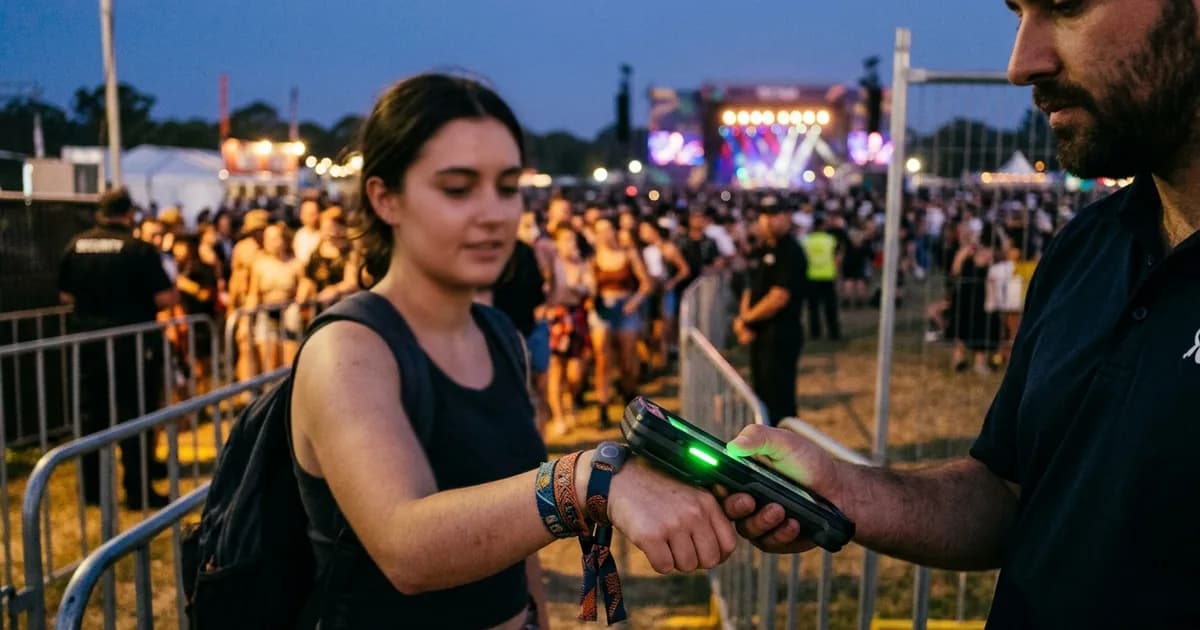
The band still looks like a wristband. Inside it is a small inlay: an antenna and a chip with an ID. A handheld or gate reader powers that chip and gets a number back. Your event software then decides what that number means: valid ticket, already used, VIP, empty wallet, open locker.
That is why RFID event wristbands show up at festivals that want faster doors and cashless bars. Staff are not squinting at a printed date. They are waiting for a green light. It is also why a chip band costs more attention at briefing: the wristband has to match the readers and the database, not only the poster colours.
You can house the same idea in different straps. RFID silicone wristbands suit a keep-on merch loop that also taps. Fabric is the usual multi-day festival shell. RFID Tyvek wristbands exist for shorter events that still need a scan. Pick the strap for wear; pick the chip for the system.
RFID vs NFC vs a printed band
| Factor | RFID | NFC | Printed only |
|---|---|---|---|
| Job | Gate scan, cashless, crowd flow | Tap with a phone or a close reader | Human-visible colour and print |
| What staff need | Readers encoded to your event | Readers or phones that speak NFC | Eyes and a colour chart |
| When it fails | Wrong chip, dead process, no backup colour | Guest holds it at the wrong distance | Copied print, dark door, wet paper |
| Skip it when | You only need a visible access mark | You have no tap journey to offer | You actually need a scanner |
When a chip is worth it
Start from the system. The wristband is a housing.
- 1
Name the transaction
Door scan, re-entry, cashless spend, locker, or all of them. If the answer is 'just a colour at the door', you want Tyvek, vinyl, or woven, not a chip.
- 2
Match the readers
Bring the scanner brand, the chip family you already use, or say you are starting from scratch. NFC event wristbands only help if something on site actually taps NFC.
- 3
Keep a visible backup
Colour still matters when a reader fails or a queue needs a human check. Do not run a chip-only door with no fallback mark.
- 4
Brief strap and encoding together
Send quantity, duration, strap type, and who encodes the chips. Browse the wristband range once the system is named.
Frequently asked questions
Are RFID wristbands safe?+
What are the downsides of RFID technology?+
Can you create your own RFID card?+
Order RFID and NFC wristbands
Chip bands in fabric, silicone, or Tyvek. Brief the scanner, then the strap.